


In conversation with… Dr Catherine Rutland, Council member of MPS
24 Nov 2026
Estimated read time:
10 min read
We sit down with Catherine to discuss her career and what she brings to MPS, of which Dental Protection is a part, as well as some of the key opportunities and challenges facing dentistry today.
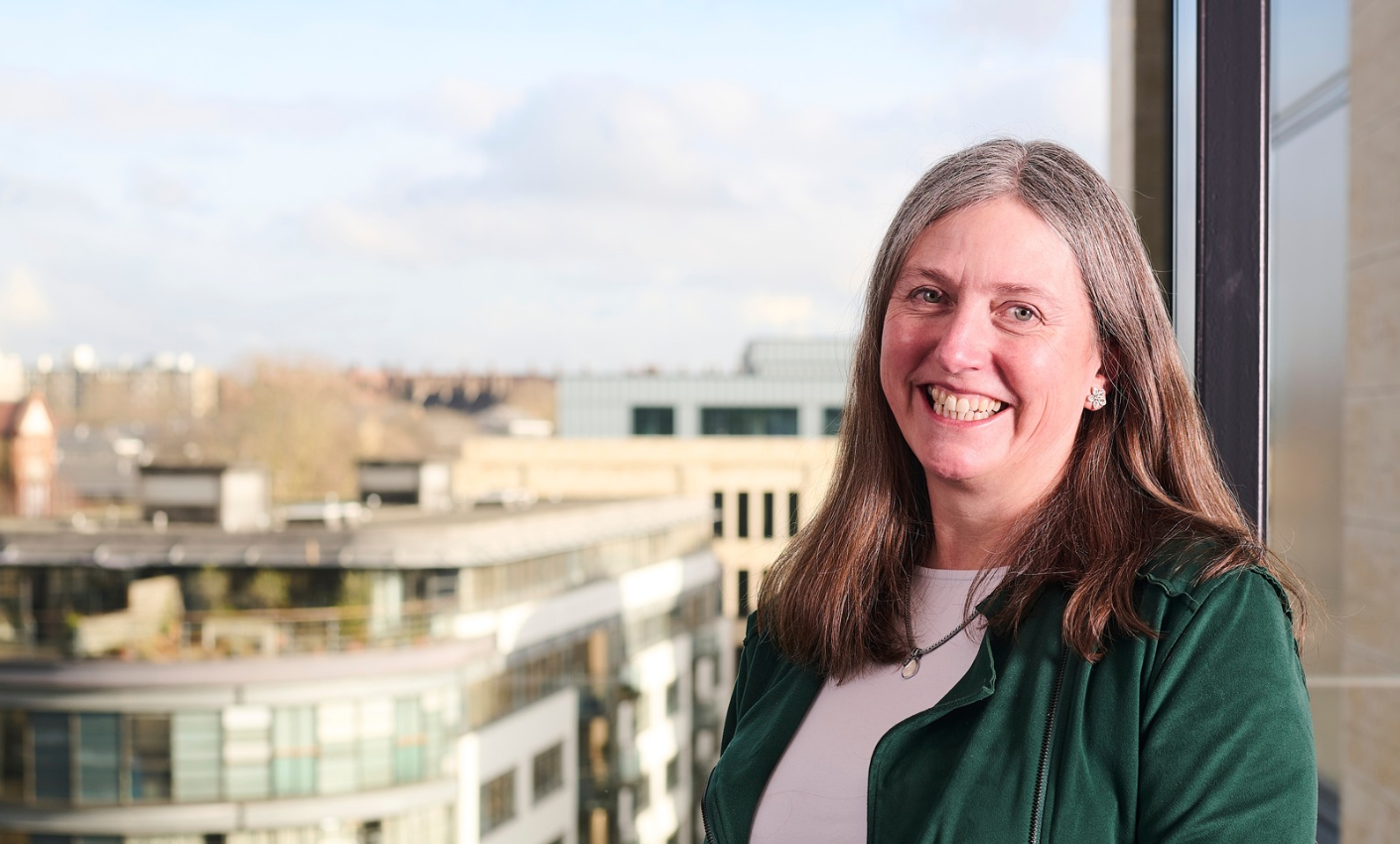
You’ve held a range of roles throughout your career – from dental practice to leadership roles with organisations and various charities linked to dentistry. What experiences do you think you bring to the MPS Council?
I think I bring a mixture of commercial and dental knowledge, and healthcare knowledge more widely. The different roles I've had have given me a broad understanding of the profession and of stakeholder engagement, including from a lobbying and policy perspective.
It was made very clear to me that my role on Council is to be part of the voice of the members. Obviously, the main voice is the members themselves, but my role is to help feed those member opinions into Council. All of my experience across different areas of dentistry hopefully gives me that perspective and allows me to contribute to that voice.
Of course, my insight is supported by proper research and insight from our membership, but I hope that the understanding I've gained through those wider roles helps me to do that effectively and ensure members' voices are heard.
Alongside your various roles, what have these experiences taught you about the profession beyond day-to-day practice?
We're a clinical profession, but dentistry is quite different to many other areas of healthcare because there is such a strong business element to it. Wherever you're working, and whatever role you're playing, you're quite often operating within a small independent practice environment.
While there are larger groups, many dental practices are still relatively small. Unlike a large hospital setting, each practice is effectively running as its own business. Understanding that is important because it creates different pressures and challenges for the profession.
I think one of the biggest issues is wellbeing and support. Like many healthcare professions, morale and wellbeing can be challenging, but in dentistry it can sometimes be difficult to know where to turn for support. Associates and principals are often self-employed, and there aren't always the obvious support structures you might find in a large organisation or hospital.
That can feel isolating and can compound problems when they arise. When something happens, people can find themselves asking: where do I go, who do I speak to, where do I get support? Those answers are not always obvious.
At the same time, there are huge positives. As a former practice owner myself, I know that running a business can be incredibly rewarding if it's something you enjoy. It provides opportunities to learn, develop, manage teams and build something of your own.
I've always felt there are enormous positives in dentistry. While there are stresses and strains, there is also a huge amount of positivity in the profession and a great many positive people. Those aren't always the voices that get heard, but they are definitely there.
What attracted you to becoming a member of the MPS Council and what does the role mean to you personally?
There were two aspects to it.
The first was almost a gut reaction. I first joined Dental Protection as a member in the week between finishing my finals and getting my results, and I've been a member ever since. Through various roles over the years, I've also worked with Dental Protection in different ways, so I've always had a connection with the organisation beyond simply being a member.
The second aspect was development. I've always believed strongly in continuing professional development. Throughout my career I've had to adapt and change, sometimes through choice and sometimes not, and development has always been important to me.
The opportunity to sit on Council appealed because it's a very different role. You're not involved in the day-to-day operations. Instead, you're able to step back, reflect and use your wider experience to help support members.
Joining Council felt like an opportunity to do that on an even broader scale, including across the wider medical membership as well.
Our dental members have strong representation on Council with yourself, Graham Stokes and Judith Husband. Why is it important that dental professionals have a voice at that level?
While there are many similarities between dentistry and medicine, particularly when it comes to claims and cases, there are also important differences and nuances.
Dentists represent a significant proportion of MPS membership across the world, and it's important that those differences are understood and represented. Having dental professionals on Council helps ensure that perspective is always included in discussions and decision-making.
Some things simply need to be considered differently in dentistry. An approach that works for everyone may not always work equally well for every profession.
As a Dental Protection member myself, I also find it reassuring to know that dental representation exists at that level. It gives members confidence that the specific challenges and nuances of their profession are understood and voiced appropriately.
What do dental professionals need most from an organisation like MPS?
At its heart, support.
MPS is there for people when they feel like their world could be falling apart around them. Thankfully, most dental professionals will never find themselves in that situation, but there is always that background concern that one day you might receive a complaint, face a claim or encounter a serious issue.
When that happens, it's often something you've never experienced before. You don't know how to deal with it, and you need someone you can trust completely to guide you through the process.
Alongside that immediate support, education is another vital part of what MPS provides, particularly in areas such as risk management – which I am particularly passionate about.
Sometimes risk management can be viewed negatively, as something you only think about when things have already gone wrong. In reality, it's about looking much earlier and considering what steps can be taken to prevent problems from occurring in the first place.
It's about asking what can be done to mitigate risk, taking human factors and practical realities into account, and putting systems and processes in place that give you confidence in the care you're delivering.
Things will sometimes go wrong. We're all human and we're treating human beings. But good risk management means knowing you've done everything reasonably possible beforehand.
Equally important is learning when something does happen. Looking back and asking what could have been done differently, whether processes need to be adjusted, and how the risk of recurrence can be minimised. To me, risk management should be an ongoing part of professional development, not something that's only considered when issues arise.
You recently visited Ireland with our Dental Director, George Wright. What were your reflections on the visit and meeting members?
It was a really valuable experience.
Although there are differences across the UK from a regulatory perspective, the overall system is broadly familiar. Visiting Ireland gave me the opportunity to see a jurisdiction where there are some more significant differences, and that was really interesting.
Spending time with the Dental Protection team was particularly helpful. It allowed me to learn from them, to understand the issues they are seeing locally and to hear their perspectives on the organisation.
As a Council member, my priority is representing members, but understanding the experiences of the teams working within the organisation is also important, and the only way to do that properly is by speaking to people directly.
Meeting members as well was equally valuable. There was a huge amount of positivity, which was really encouraging to see. Given the strong membership base in Ireland, it was refreshing to hear that positive tone and to speak to members about a wide range of topics, including careers, education and professional development.
For me, being out and speaking to people is an essential part of the role. You learn so much from those conversations and it helps ensure you're hearing directly from the people you're there to represent.
Looking at dentistry today, what do you think are the biggest pressures facing dental professionals?
Some of the pressures are the same pressures that have always existed, some are new.
One of the most important is looking after yourself and maintaining your own wellbeing. We sometimes underestimate how important that is. Dentistry relies heavily on empathy, concentration and communication. When people are tired, stressed or worn down, those things become harder.
There is also significant anxiety around regulation, legislation and complaints. While the reality may not be dramatically different from when I qualified, there is certainly a perception that it is, and that creates genuine worry within the profession.
Social media presents another challenge. It can be an incredibly positive force and offer huge benefits, but it can also contribute to negativity and unhelpful ways of communicating. People often say things online that they would never say face-to-face.
For me, that's a challenge the profession itself must address. It isn't something that can simply be solved by somebody else. Creating an environment where people feel positive, supported and psychologically safe is incredibly important and not always easy.
While there are plenty of developments to navigate, whether that's artificial intelligence, new clinical techniques or evolving technologies, dentistry has always adapted to change. We are used to learning and evolving.
The bigger challenge is often around behaviour, wellbeing and support.
How can dentists navigate these pressures?
My previous answer links closely to mentoring. In dentistry, there can sometimes be a perception that mentoring is only for people who are struggling or undergoing remediation. My experience outside practice has shown me that's not how mentoring should be viewed.
In many sectors, mentoring and coaching are considered normal parts of development. Having a mentor doesn't mean something is wrong. It means you're continuing to learn and grow.
Mentorship can also help reduce feelings of isolation. It provides perspective, reassurance and sometimes simply somebody who understands what you're going through. So I would encourage anyone to look at seeking out mentoring or peer support opportunities.
Is there anything else you would like members to know?
One thing I'd encourage people to do is focus on the positives that exist within their professional lives.
It's very easy to concentrate on the one thing that went wrong during the day and overlook the many things that went right. Dentistry tends to attract high-performing individuals who don't like things going wrong at all. But we're humans treating humans, and perfection isn't always possible.
It's important to take time to reflect on the positive things. The patient interaction that went well, the team member who supported you, the achievement you're proud of. Those things matter.
From an MPS and Dental Protection perspective, I would also encourage members to be proactive. Don't wait for something to happen before taking action. Whether it's risk management, education or professional development, there are many things within our control that can help minimise risk and put us in a stronger position if challenges do arise.
I myself had a time in my career where I couldn’t work for eight months due to an autoimmune eye condition and ultimately had to stop practising. Having to change my career gave me a lot of time to reflect on what I loved about dentistry and what mattered most to me. It reinforced the importance of focusing on what you can control, continuing to develop and recognising the positive contribution you make every day.