



The communication lesson dentistry never taught us
18 Aug 2026
Estimated read time:
9 min read
Learn about a recent event Dental Protection sponsored helping graduates and early career clinicians, with another event planned soon.
"What is a limitation that is currently holding you back when it comes to communicating with your patients?"
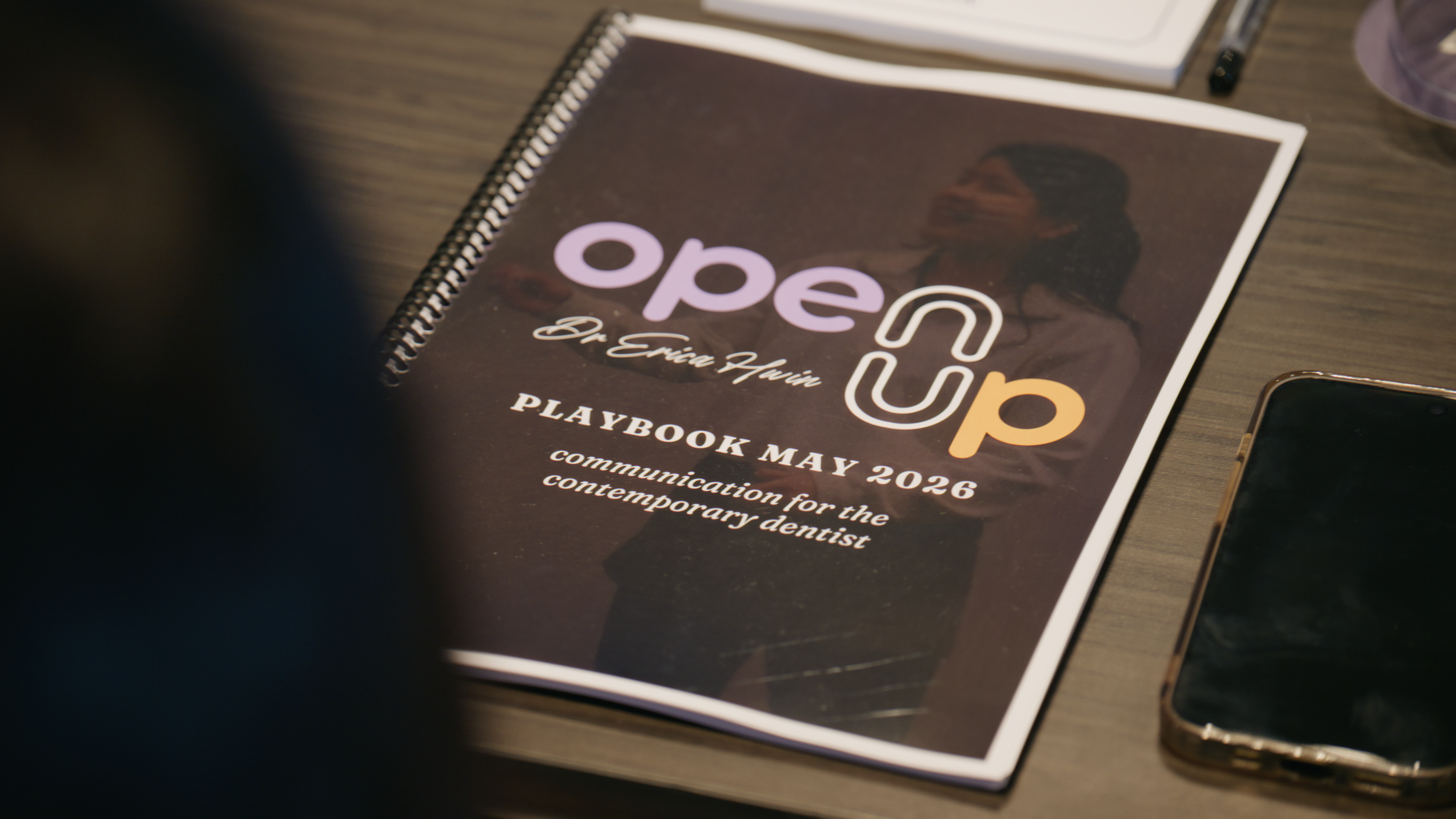
I asked this question standing in front of a room of twenty bright-eyed clinicians at our very first Open Up workshop in May.
The answers came quickly.
"Being scared of coming across salesy and pushy."
"Rambling and overexplaining to the point of confusing the patient."
"Not sounding confident enough."
"Not being able to manage stress, and worrying that patients can tell."
Sound familiar?
I think we've all felt this.
We tell ourselves that if we become more knowledgeable, more experienced or more clinically competent, confidence will naturally follow. If we do another clinical course, add more letters behind our name, or simply understand the dentistry better, patients will finally trust us, understand us and accept treatment. That if we had more mentorship, worked in a different practice, saw different patients, we’ll finally get to do the dentistry we want to.
And it makes sense why we think this way.
Dentistry trains us to value knowledge. We spend years learning how to diagnose disease, formulate treatment plans and solve complex clinical problems. We're taught to think in facts and evidence, logic and scientific reasoning. We're problem solvers, fixers and doers. We become very good at identifying disease, seeing problems and wanting to do more.
But what I've come to realise over the years is that the dentistry itself was rarely the problem.
At the crux of it, it's us.
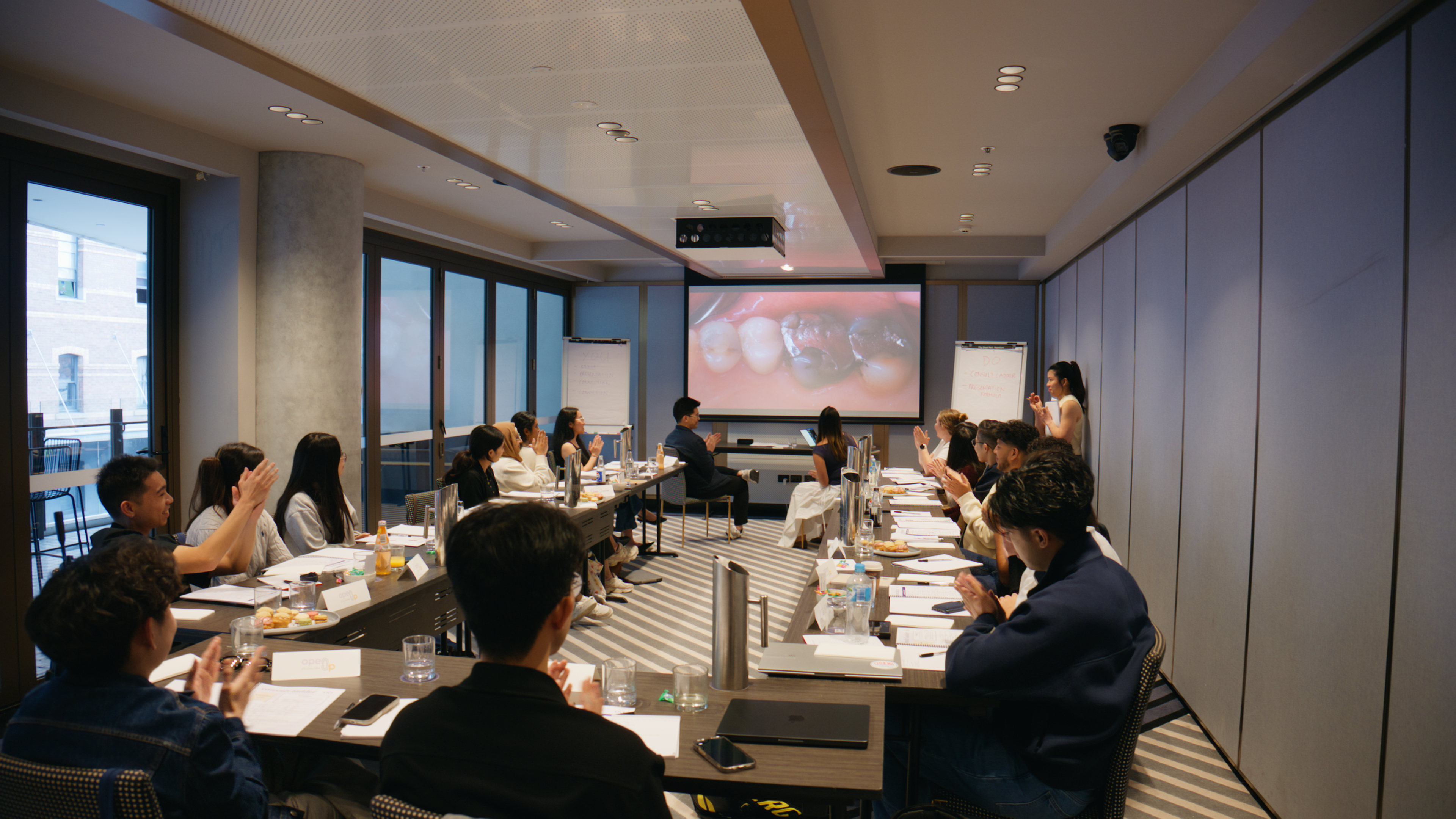
The problem isn't doing dentistry
Over the last five years, I've recorded more than one hundred podcast episodes, attended more CPD than I'd care to admit, built an incredible community through The Graduate Dentist, and had the privilege, and oftentimes uncomfortable reality, of publicly documenting my journey from student to clinician.
I've spent countless hours speaking with students, graduates and experienced practitioners, listening to stories of difficult consultations, challenging patients, treatment plans patients say they’ll think about, complaints that keep people awake at night, and moments of self-doubt that make otherwise capable clinicians question whether they’re cut out for the profession.
And through all of those conversations, alongside my own experiences, I've come to realise something.
The biggest thing holding most clinicians back often isn't their clinical ability.
It's the habits we unknowingly practise every day that quietly undermine us.
It's apologising for our recommendations before we've even made them. It's overexplaining because we're worried patients won't believe us. It's avoiding difficult conversations because we don't want to upset anyone. It's second-guessing ourselves after every consult.
Over time, those behaviours begin to reinforce the stories we tell ourselves.
That we don't know enough. That we're not good enough. That we’re not strong enough. And once we are, then we'll finally feel confident and finally be ready.
But confidence doesn't work like that.
It comes from doing hard things over and over again until we've built enough proof for ourselves that if we've done it before, we can do it again. Confidence is a feeling that comes after the fact, and feelings aren't always within our control.
But what we can control is our behaviour.
Just because you look young and feel young doesn't mean you can't command a room and lead your patients. Just because you don't have all the answers doesn't mean you can't help someone feel safe, looked after and able to trust you. Just because you're early in your career doesn't mean you can't do incredible dentistry.
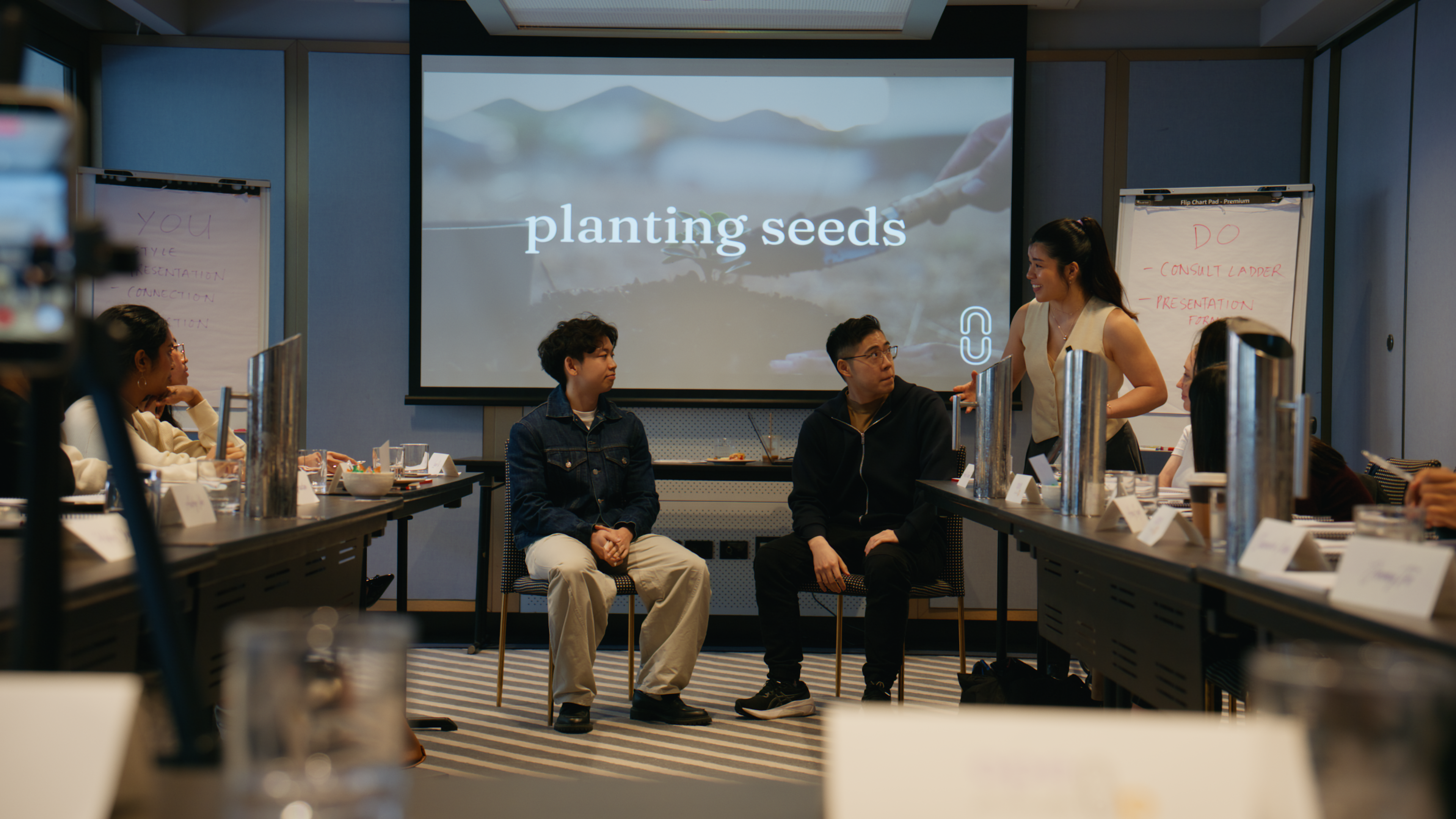
We don't get to do the dentistry we want by learning more dentistry
As graduates, we come into the profession eager to jump in and get our hands dirty. We want to learn everything, do everything and help everyone. We have this infectious optimism about what dentistry should be. We want to be the very best dentist this patient has ever met.
But I think where it starts to fall apart is when we forget to meet our patients where they are.
We spend years learning how to diagnose disease, formulate treatment plans and identify problems. But very little time is spent learning how to understand the person experiencing them.
We were taught how to see dentistry.
Nobody taught us how to see the patient.
We forget that our patients have often been going to the dentist for longer than we've been dentists, sometimes even longer than we've been alive. They arrive carrying fears, expectations, beliefs and past experiences that shape the way they see dentistry. Some have had wonderful experiences. Others have spent years avoiding appointments because of fear or embarrassment. Some are worried about finances. Others are worried about pain. Some simply don't see the problem the same way we do.
Yet as clinicians, we often assume that if we explain the dentistry clearly enough, patients will naturally arrive at the same conclusion we have.
When they don't, the consultation doesn't land the way we hoped. The conversation feels harder than it should. Presenting treatment becomes more uncomfortable. The patient seems hesitant. Something just doesn't quite click.
And slowly, our confidence starts to chip away.
We compare ourselves to everyone around us. We wonder whether they're finding practice easier than we are. We question our treatment decisions. We feel like imposters. We replay conversations over and over on the drive home.
Listening to twenty clinicians describe almost identical frustrations at our first Open Up workshop really solidified the observations I'd been gathering for years. We weren't struggling because we cared too little about dentistry. We were struggling because nobody had ever shown us how to bridge the gap between what we knew and what our patients understood.
The thing is, we don't get to do the dentistry we want by learning more dentistry.
We get to do it by helping our patients understand why it matters, and by overcoming all the self-limiting barriers we were putting in our own way.
We become the behaviours we practise
These were all the exact same frustrations I experienced as a new graduate. And it was through trying to solve them that Open Up was born.
Over the last year, I took a deep dive into my own consultations, analysing and unpacking the way I communicate with patients. I wanted to understand all the little components that make up not just my communication style, but the beliefs, thought processes and philosophy that sit underneath it.
Not because I wanted to teach scripts. Not because I wanted to teach sales. But because I wanted to help clinicians become the kind of communicators patients naturally trust.
The more I analysed these conversations, the more I realised this wasn't really about communication at all.
It was about understanding people. And that's how The YOU and The DO were created.
The YOU is about bringing out the best version of ourselves. It's about carrying ourselves with authority, ease and authenticity so that patients feel calm, safe and looked after in our hands. It's about learning how to instil confidence when we're still finding confidence ourselves.
Because patients don't simply respond to our words. They respond to our conviction, our presence and ultimately how we make them feel.
The DO is a collection of frameworks that bring structure to our thinking.
Without structure, many of us default to information dumping. We ramble. We over-explain. We jump between ideas because we're trying so hard to be thorough that we unintentionally create confusion.
These frameworks serve as a filter for our thoughts. They help us organise information in a way that patients can actually follow. They help us educate, enlighten and empower patients to make informed decisions for themselves.
When patients understand what's happening, why it matters and where it may lead, treatment recommendations stop feeling like sales. Trust has already been built before we need to rely on it. There is clarity before confusion has a chance to develop. Relationships are strengthened long before they're ever tested.
When patients feel seen, understood and genuinely involved in a treatment plan that suits them, consultations stop feeling pushy. Instead, they become collaborative. Patients become active participants in their care rather than passive recipients of information. And perhaps most importantly, we leave work carrying a little less self-doubt and a little more confidence in the conversations we're having every day.
That's where communication becomes incredibly powerful.
And honestly, it's my favourite part of dentistry.
Looking ahead
If our first Open Up workshop taught me anything, it was just how right it felt to share something I care so deeply about with a room full of people who genuinely wanted to grow.
Watching people's faces light up as ideas clicked into place. Seeing clinicians realise that the challenges they'd quietly carried for years weren't unique to them. Hearing about the conversations they'd already gone back and approached differently the very next week.
It reminded me that communication isn't something we're simply born knowing how to do. It's a skill that can be learnt, practised and refined.
Most importantly, it reminded me that so many of the struggles clinicians carry quietly are shared by the person sitting right beside them. And that is exactly why I started The Graduate Dentist in the first place.
If you're a student, new graduate or early-career clinician who wants to feel more confident communicating with patients, build stronger patient relationships and approach difficult conversations with greater clarity, we'd love to have you join us for our next event in Brisbane in 2027.
Details here.
Communication isn't just a clinical skill.
It's a human skill.
And when we get it right, everybody benefits.
A curious storyteller and avid asker of questions, Erica has recorded more than 100 podcast episodes over the past five years, building The Graduate Dentist into a leading platform that guides young dentists navigating the realities of clinical practice.
Beyond the microphone, Erica is a general dentist with a passion for comprehensive patient care. She is regularly invited to speak at universities, study clubs, and conferences for practice owners and industry leaders, offering a unique perspective that bridges the gap between experienced clinicians and the next generation of dentists.
Alongside her speaking, Erica coaches new grads in communication, confidence, and navigating the transition into clinical practice. She is passionate about fostering The Graduate Dentist community and hosts meetups across Australia that have brought together hundreds of like minded clinicians.
Her mission is simple: to help young dentists communicate with confidence, build trust, and create careers they genuinely enjoy.
Dental Protection are sponsors of the recently held and the upcoming event.

